








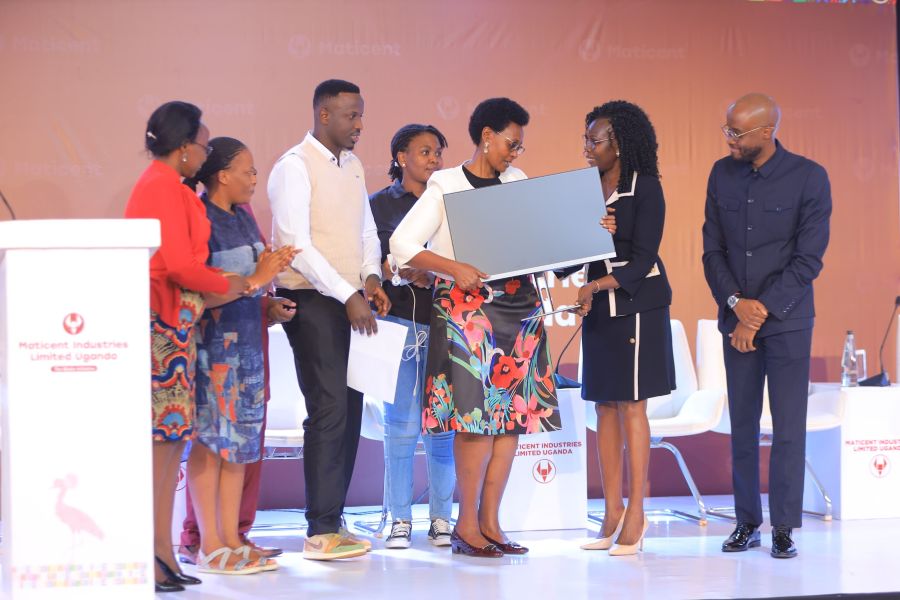
Maticent Industries Uganda Limited, a local technology company, has unveiled a bold initiative aimed at transforming Uganda’s education sector by providing university students with locally manufactured computers on a flexible credit scheme.
Dubbed the Bbala Initiative, the program allows students enrolled in any accredited Ugandan university to acquire a computer by paying just 20% upfront, with the remaining balance spread over two years. The initiative is designed to promote equitable digital access while equipping learners with essential tools for academic success.
“This is our bold move to promote technology in education by equipping every student with a computer and giving them enough time to pay,” said Eragy Bashonga Alpha, CEO of Maticent Industries, during the launch event on Friday.
Bashonga revealed that the company will manufacture the computers locally, with a monthly production capacity of up to 25,000 units. The computers, priced between shs1.5 million and shs7 million, will cater to a range of academic and professional needs.
“What makes our desktops unique is the built-in Uninterrupted Power Supply (UPS) system. Unlike most desktops on the market, ours remain operational for up to four hours during power outages,” Bashonga added.
The model, he noted, has already been successfully implemented in the Democratic Republic of Congo, where over 15,000 students have benefited from similar schemes.
The launch received support from the State Minister for Investment and Privatization, Hon. Evelyn Anite, who praised the initiative for its long-term impact on Uganda’s economy and education sector.
“Maticent is helping build an integrated, self-sustaining economy through technology,” Anite said. “When I was at university, computers were so rare that we queued just to access one. This program, offering up to two years of repayment time, ensures that even students without upfront cash can access computers to enhance their education.”
The Bbala Initiative aligns with broader efforts to close the digital divide in Uganda and across Africa, where access to devices and connectivity remains a barrier to inclusive learning.