










Ugandans living abroad have asked Parliament to amend the Protection of Sovereignty Bill, 2026, warning that some of its provisions could weaken trust, reduce investment, and disrupt family support systems.
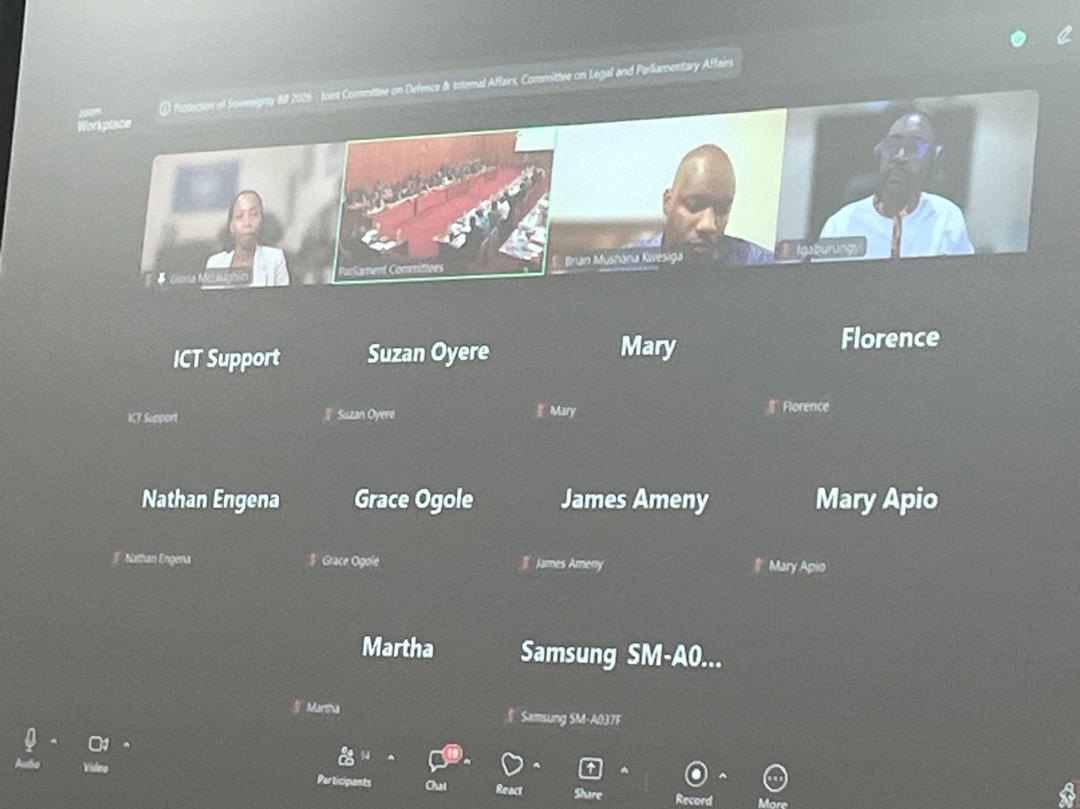
Appearing via Zoom before the Joint Committee on Defence and Internal Affairs and Legal and Parliamentary Affairs, members of the diaspora said classifying Ugandans abroad as foreigners and restricting remittances would unfairly target citizens who make a major contribution to the country’s economy.
US-based Timothy Kangajwe told the committee that Ugandans abroad should not be treated as foreigners.
“When a bill defines us as such, it’s not a drafting error, it’s a statement. We send US$2.5 billion home for families, not politics. Don’t put government between our children and us,” he said.
Brian Mushana Kwesiga, former President of the Uganda North America Association (UNAA), said while protecting national sovereignty is important, citizens should not be mistaken for foreign agents.
“It is difficult to ask Ugandans abroad to invest while defining them as foreigners. Build trust, don’t break it,” he said.
Gloria Nalule, Executive Director of the Uganda Global Forum, said most Ugandans in the diaspora want the bill changed.
“Classifying Ugandans abroad as foreigners risks a two-tier citizenship,” she said, adding that 77 percent of diaspora respondents support amendments to the bill.
The Joint Committee is continuing to meet different stakeholders as Parliament considers the proposed law.
The Attorney General Kiryowa Kiwanuka recently acknowledged concerns around definitions but maintained that the provisions are narrowly tailored to activities outlined in the Bill.
“The term ‘foreigner’ is used strictly within the context of the activities defined under the Bill,” he explained. “It applies only where actions are undertaken in the interest of foreign entities in Uganda’s political space.”
He also dismissed fears that the law would disrupt remittances or legitimate private transactions.
“This Bill does not target personal financial support between families,” Kiryowa said. “Its scope is limited to political activities conducted on behalf of foreign interests.”