











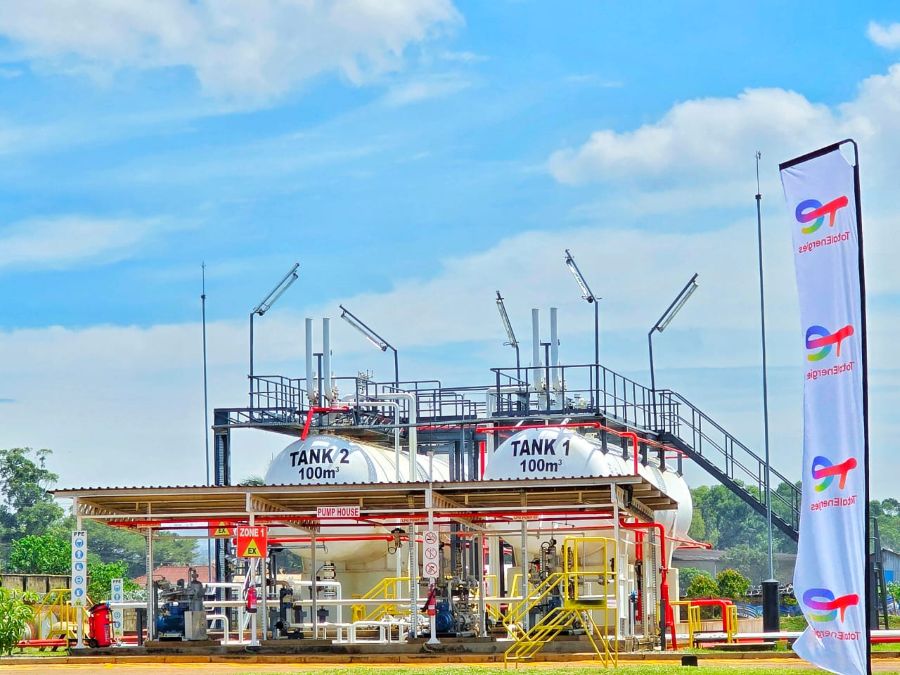
TotalEnergies Uganda Limited has commissioned a newly revamped Liquefied Petroleum Gas (LPG) filling and storage plant in Jinja, in a move aimed at strengthening access to clean and reliable cooking energy.
The upgraded facility features fully automated systems designed to ensure accurate cylinder filling, eliminate leakage, and provide tamper-proof sealing. Company officials say the improvements are intended to enhance safety standards while giving consumers confidence in the quality and quantity of LPG supplied.
Speaking at the commissioning ceremony, Managing Director Olufemi Babajide said the investment reflects the company’s long-term commitment to supporting Uganda’s energy transition.
He noted that the project aligns with TotalEnergies’ focus on delivering reliable and cleaner energy solutions, particularly as the country prepares for domestic LPG production linked to its oil developments.
The company’s Executive Vice President for East and Central Africa, Biova Agbokou, said the upgraded plant contributes to TotalEnergies’ broader ambition of expanding access to clean cooking energy to millions across Africa.
She highlighted LPG as a safer alternative to traditional fuels such as charcoal and firewood, noting its potential to reduce health risks, save time for households, and lower carbon emissions.
Ugandan officials and sector stakeholders welcomed the development, describing it as a timely investment in the country’s energy ecosystem. Uganda National Oil Company (UNOC) said the facility complements national efforts to promote sustainable energy use and clean cooking solutions.
UNOC’s Business Development Manager, Ben Kagonyera, noted that the project comes at a critical time as Uganda prepares for oil production, which is expected to also generate LPG. He said locally produced gas will play an important role in improving access and affordability of clean energy.
Operational details indicate that the plant, situated on approximately five acres, has a storage capacity of up to 140 tonnes of LPG before cylinder filling. It can process more than 40 tonnes per day—an increase from about 30 tonnes previously—with daily cylinder output ranging between 40 and 50 tonnes depending on demand.
The facility, initially constructed in 2016, reached full operational completion in December 2025, with space reserved for future expansion.
The commissioning marks a significant step in Uganda’s transition toward cleaner energy sources, with LPG expected to play a central role in reducing reliance on biomass fuels and advancing environmental sustainability.