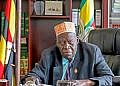












Uganda and the United Arab Emirates (UAE) have reaffirmed their commitment to deepen bilateral trade and investment cooperation across energy, infrastructure, agribusiness, and finance sectors following high-level discussions at the Fourth Uganda–UAE Business Forum held at Speke Resort, Munyonyo.
The three-day forum, organized by Uganda’s Missions in Abu Dhabi and Dubai in partnership with the Ministry of Foreign Affairs and the UAE Embassy in Kampala, drew over 300 delegates from both countries.
In her keynote address, Prime Minister Robinah Nabbanja noted that the UAE has emerged as Uganda’s largest export destination, with bilateral trade now valued at Shs 10.8 trillion as of September 2025.
“The value of UAE investments in Uganda’s energy, infrastructure, agribusiness, oil and gas, manufacturing, real estate, and tourism sectors has reached Shs 13.3 trillion,” Nabbanja said.
“Uganda ranks among the seven fastest-growing economies in the world and maintains one of the most stable currencies on the continent.”
She reaffirmed the government’s long-term goal to expand the economy tenfold by 2040.
“Our aim is to grow the size of Uganda’s economy from Shs 233 trillion to Shs 1.9 quadrillion by 2040. We invite our partners from the United Arab Emirates to join us on this transformative journey as we move from lower-middle-income to upper-middle-income status,” she added.
Minister of State for Investment Evelyn Anite urged UAE investors to explore opportunities in inland water transport, mineral value addition, and affordable credit financing for local entrepreneurs.
“Our biggest constraint is access to credit,” she said. “We know you have affordable capital in the UAE — bring that financing so our small and medium enterprises can scale up production.”
Anite also called for partnerships in developing modern vessels, upgrading ports and waterworks along Lakes Victoria, Kyoga, and Albert, and establishing refineries to process gold and other minerals locally.
“The same model that attracted gold refiners to the UAE should bring them here,” she said.
“After you’ve paid your dues, you’re free to move or reinvest your profits. Uganda’s liberalized economy guarantees freedom and stability for investors.”
Patrick Ayota, Managing Director of the National Social Security Fund (NSSF), highlighted the Uganda shilling’s appreciation against the U.S. dollar over the past five years, noting this as evidence of economic stability.
“If you came into Uganda five years ago with Shs 38 million (equivalent to $10,000) and converted it back today, you would have Shs 40.6 million — about Shs 2.6 million more,” Ayota said.
“That strength reflects confidence in Uganda’s economic fundamentals and a liberalized financial system.”
Ayota revealed that NSSF is collaborating with UAE institutions to co-invest in agriculture and food security ventures, positioning Uganda as a key production hub for the UAE’s 2051 domestic food strategy.
Uganda’s Ambassador to the UAE, Zaake Wanume Kibedi, said the partnership between the two nations has evolved into a multi-sector collaboration rooted in trade, infrastructure, and innovation.
“Trade between Uganda and the UAE has grown exponentially, making the UAE Uganda’s leading export destination,” Ambassador Kibedi said.
“This partnership represents a bridge of mutual prosperity.”
He noted that bilateral trade had expanded from Shs 1.1 trillion in 2018 to Shs 10.8 trillion in 2025, attributing the growth to strong diplomatic engagement, improved logistics, and private sector dialogue.
“This growth is not by coincidence — it reflects deliberate policy coordination, consistent investor confidence, and the trust our Emirati partners have in Uganda’s economic stability,” he said.
Kibedi emphasized that both countries are transitioning from traditional trade to strategic co-investment partnerships in infrastructure, renewable energy, and agro-industrialization.
“Our partnership is no longer transactional — it is transformational,” he said. “The focus now is to ensure that investments create jobs, promote technology transfer, and position Uganda as a gateway for Gulf capital into Africa.”
Peter Muramira, Director at the Uganda Investment Authority (UIA), said Uganda is moving from an energy-scarce to an energy-secure economy through a Shs 266 trillion investment portfolio spanning electricity, oil and gas, and industrial infrastructure.
He cited flagship projects such as the Shs 114 trillion Buyende Nuclear Power Plant, a Shs 1 trillion LPG terminal, and a Shs 19 trillion petrochemical industrial park as key pillars of Uganda’s commitment to sustainable industrialization and value addition.
“We seek investors who bring capital, technology, and expertise,” Muramira said. “Uganda’s incentive framework and policy stability make it not just open for business, but ready for transformation.”
According to the Ministry of Foreign Affairs, the forum reaffirmed Uganda’s readiness to host large-scale investments in energy, ICT, tourism, and manufacturing, in line with Vision 2040.
The Uganda–UAE Business Forum continues through October 29, 2025, featuring sectoral panels, business-to-business (B2B) meetings, and field visits aimed at translating discussions into tangible partnerships.