
























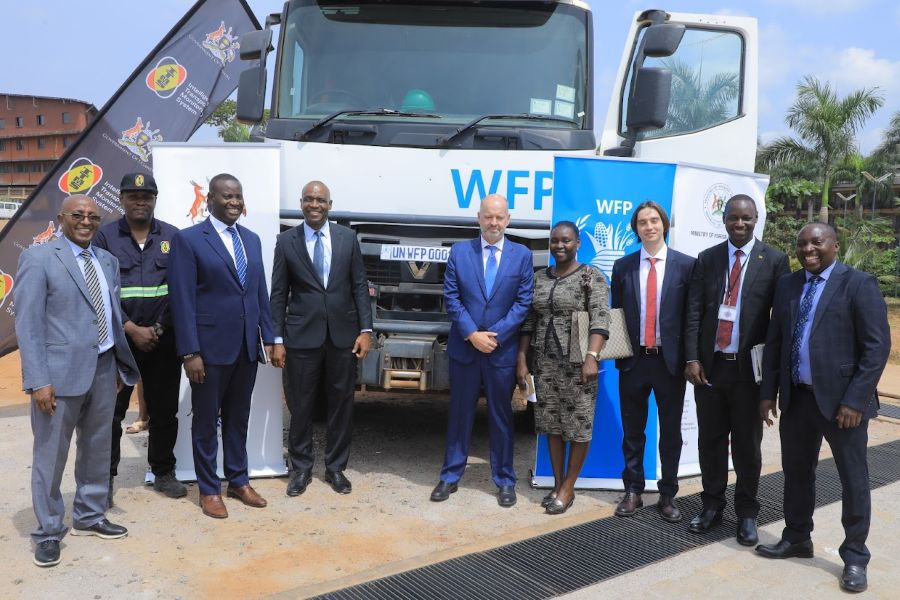
Uganda and the United Nations World Food Programme (WFP) have signed a landmark amendment to the Memorandum of Understanding officially designating Kampala as the home of the WFP Global Fleet Hub—Africa’s central logistics base for rapid humanitarian response.
The signing ceremony, witnessed today by the Ministry of Foreign Affairs, marks a major step in strengthening Uganda’s position as a regional humanitarian and logistics powerhouse.
Ambassador Charles Ssentongo, Chief of Protocol, represented the Minister of Foreign Affairs and delivered the Ministry’s remarks.
He thanked WFP for its continued role in facilitating humanitarian assistance in Uganda and across the region, and commended UN agencies for their steadfast support to vulnerable communities.
Ambassador Ssentongo noted that hosting the Global Fleet Hub presents significant opportunities for Uganda, including new jobs, skills development, and enhanced technical capacity in logistics and fleet management.
He emphasized that the Hub further solidifies Uganda’s status as a key Humanitarian Coordination Centre for the African continent.
A key highlight of the ceremony was the signing of the amendment authorising the deployment of special UN/WFP fleet plates.
These plates will enable humanitarian vehicles to cross borders without the repeated delays associated with country-by-country re-registration—an innovation expected to dramatically reduce emergency response times across the region.
The special WFP plates will allow emergency convoys to move more freely and quickly across borders as they deliver food and life-saving supplies to communities affected by disasters.
“This is a breakthrough in how fast humanitarian assistance can be deployed across the continent,” Ambassador Ssentongo said .
“Uganda is proud to play a central role in improving the speed and efficiency of emergency response efforts.”
WFP notes the new plates will cut transportation time for relief items from weeks to days, and in some cases, just hours—especially during floods, droughts, disease outbreaks or conflict-related crises.
The cting Commissioner for Transport Regulation and Safety at the Ministry of Transport , Apollo Kashanku described the move as part of Uganda’s broader strategy to modernize its transport systems and support global humanitarian partners.
“Uganda remains committed to leveraging innovation to save lives. These plates will ease movement for WFP’s Emergency Response Fleet and enhance coordination during crises,” he said.
The introduction of WFP plates builds on Uganda’s recent rollout of digital number plates under the Intelligent Transport Monitoring System (ITMS)—a project aimed at improving security, tracking stolen vehicles and enhancing road safety.
The Ministry of Foreign Affairs reaffirmed Uganda’s commitment to strengthening multilateral humanitarian cooperation and deepening partnerships that advance regional stability and resilience.