









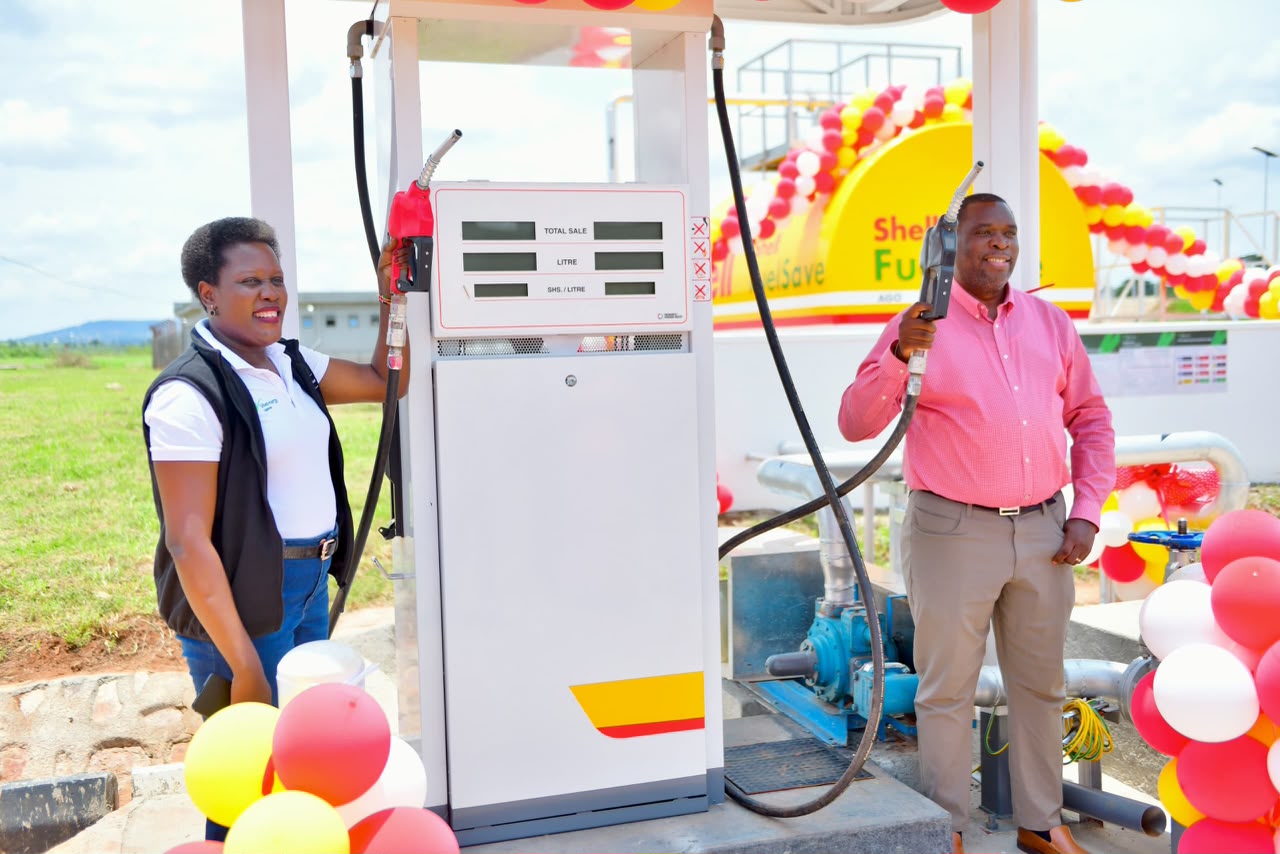
Vivo Energy Uganda, the company that markets and distributes Shell-branded fuels and lubricants, has commissioned custom-engineered bulk fuel storage and dispensing facilities at Kiira Motors Corporation in Jinja and West International Holding (WIH) Cement in Moroto District.
The high-capacity installations are designed to provide the two manufacturing companies with direct access to fuel and lubricants at their respective production sites, reducing the logistical challenges associated with fuel supply and supporting uninterrupted operations.
The facilities feature automated dispensing and digital fuel management systems designed to monitor fuel volumes, track consumption and improve inventory control. They also incorporate spill-containment and other safety measures aimed at reducing fuel losses and enhancing operational safety.
The investment is part of Vivo Energy’s commercial customer proposition, “Powering Your Next Move,” which seeks to provide businesses with energy solutions intended to improve efficiency, control operating costs and support continuous operations.
Speaking at the commissioning ceremony, Vivo Energy Uganda Managing Director Joanita Mukasa Menya said the installations were intended to provide more than fuel supply by addressing operational and logistical challenges faced by industrial customers.
“Our partnership with WIH Cement and Kiira Motors goes far beyond supplying fuel. By installing dedicated, automated fuel facilities right at their production facilities, we are removing logistical friction, protecting their equipment, and helping them maintain continuous production,” Menya said.
She said the initiative was part of Vivo Energy’s broader strategy of providing commercial customers with infrastructure and energy solutions to support Uganda’s industrial development.
Aminata Sarr, Vivo Energy Group Head of Commercial (B2B) Business, said industrial customers across Africa increasingly require energy solutions that can improve operational efficiency and provide greater predictability in fuel management.
She said the installations at Kiira Motors and WIH Cement demonstrate how infrastructure, monitoring technology and supply-chain solutions can be combined to support large-scale industrial operations.
Kiira Motors Corporation Chief Executive Officer Eng. Paul Isaac Musasizi said the on-site fuel facility would support the company as it scales up vehicle production at the Kiira Vehicle Plant in Jinja.
“As we scale up commercial production of our Kayoola buses at the Kiira Vehicle Plant in Jinja, having guaranteed, high-quality fuel on-site is essential,” Musasizi said.
He said the facility would support plant machinery, vehicle testing and logistics operations.
Kiira Motors Corporation is a state-owned automotive company established from a Makerere University innovation project. The company has developed electric and solar-powered vehicle technologies and manufactures buses, including the Kayoola EVS, at its Jinja plant.
Ma Chao, Chief Executive Officer of WIH Cement Uganda, said reliable fuel supply was critical to maintaining operations in the cement and heavy manufacturing sector.
“In heavy manufacturing, equipment downtime directly affects market supply and costs. Vivo Energy’s on-site fuel solution guarantees that our heavy machinery and transport operations run continuously with zero energy bottlenecks, supporting our long-term production targets in Uganda,” Chao said.
WIH Cement, a subsidiary of West China Cement, manufactures cement, clinker and other construction materials under the Yaobao brand. Its integrated clinker and cement manufacturing facility is located in Moroto District.
Vivo Energy Uganda said the new installations form part of its expanding commercial offering to customers in sectors including manufacturing, construction, agriculture and transport.
The company also provides Shell fuels and lubricants, customised fuel storage systems and digital monitoring solutions.
Among these is Vivo Energy Continuous Equipment Monitoring (VE-CEM), a fuel tracking and telemetry system designed to monitor fuel consumption, detect potential losses and support fleet and equipment management.
The company said the combination of on-site storage, automated dispensing and digital monitoring is intended to give industrial customers greater visibility over fuel use while supporting equipment availability and operational continuity.