










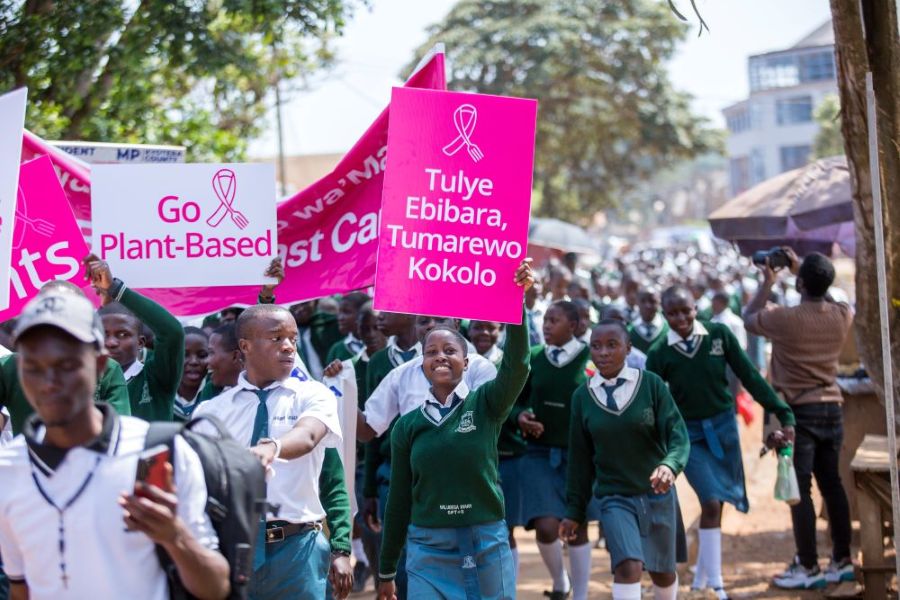
More than 1,000 women, schoolgirls, health workers, and local leaders turned out in force on Friday for a breast cancer awareness rally in Kyotera District, aimed at promoting prevention through nutrition and lifestyle.
Organised by the Physicians Committee for Responsible Medicine (PCRM), the event was part of the global Let’s Beat Breast Cancer campaign and comes ahead of Breast Cancer Awareness Month in October.
The rally, held at Kalisizo Playground, carried a science-backed message: a whole food, plant-based diet can play a significant role in reducing breast cancer risk.
According to the Uganda Cancer Institute, breast cancer is the most common cancer among women in Uganda, affecting approximately four in every 100 women. However, late-stage diagnosis remains a critical challenge—up to 89% of Ugandan women present with Stage III or IV breast cancer, drastically limiting survival outcomes.
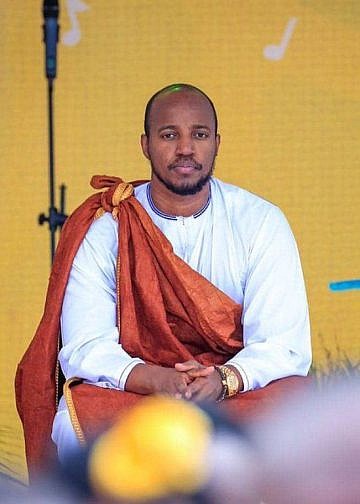
Mark, PCRM’s representative in Uganda, emphasised that cancer prevention should be an ongoing public health priority.
“While October turns the world pink, our commitment does not end when the month is over. Science shows that what we eat can either increase or reduce our risk of developing cancer. Shifting to a plant-based diet is a step toward prevention and empowerment,” he said.
Among the day’s speakers was Juliet Namagembe, a breast cancer survivor and mother of three from Kyotera. She shared a moving testimony about how changing her diet after diagnosis gave her renewed strength and purpose.
“When I was diagnosed with early-stage breast cancer, I feared the worst. But I began eating more vegetables and local plant-based foods like my grandmother used to grow. It made a difference. I felt stronger, more in control. I share my story so that other women know their diet matters,” she said.
Her story echoed the event’s broader theme of prevention through everyday choices—choices accessible to ordinary Ugandans.
Dr. Joseph Lule, a consultant surgeon at Mulago Hospital, noted the urgent need for community education and prevention-focused strategies, especially among young women.
“We are seeing rising numbers of breast cancer cases among younger women. Prevention must begin at the community level. Rallies like this help demystify cancer and provide families with actionable steps, such as consuming more locally grown vegetables, fruits, and whole grains,” Dr. Lule explained.
Kyotera County Member of Parliament, John Paul Mpalanyi also attended the event, expressing support for more investment in preventive healthcare and community sensitisation campaigns.
“Breast cancer is not just a personal health issue; it affects families, livelihoods, and entire communities. What we witnessed here today proves that awareness must start at the grassroots. I applaud PCRM for this effort and pledge to continue advocating for community health education,” Mpalanyi said.
The Kyotera rally was one of many taking place worldwide as part of PCRM’s Let’s Beat Breast Cancer initiative. The campaign advocates four evidence-based actions to lower breast cancer risk: consuming a plant-based diet, engaging in regular exercise, maintaining a healthy body weight, and limiting alcohol intake.
A recent PCRM survey conducted in the United States found that only 28% of women were aware of the link between diet and breast cancer. In Uganda, organisers say awareness is even lower—underscoring the importance of events like the one in Kyotera.
The event featured public health messages delivered in both English and Luganda, with chants of “Fight Cancer with Food!” echoing throughout the venue and into surrounding streets.
As Uganda prepares to mark Breast Cancer Awareness Month in October, health advocates are calling for a renewed, year-round focus on prevention and early detection.