









President Museveni has urged Ugandans to prioritize wealth creation as the most sustainable pathway to employment, saying opportunities already exist—particularly in agriculture—if citizens adopt practical and disciplined approaches.
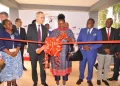
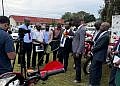
Speaking during International Labour Day celebrations at Nkoyoyo Boarding Primary School Grounds, the President emphasized that job creation should be driven by productivity rather than reliance on formal employment.
The event was held under the theme: “Safeguarding Uganda’s Progress: Empowering the Workforce and Promoting Decent Work for Competitive Enterprise.”
Museveni cited successful small-scale farmers as evidence of untapped potential, including a Fort Portal-based farmer operating on 1.2 acres who earns over Shs 200 million annually through poultry and dairy farming, employing more than 10 people. He said such models, if replicated, could significantly reduce unemployment.
Uganda has approximately 40 million acres of arable land, the President noted, adding that effective utilization of this resource could naturally generate jobs. He encouraged citizens to adopt the government’s four-acre model or even smaller ventures, pointing to examples of profitable poultry farming on limited land.
“The issue is not jobs, it is about following government advice,” Museveni said.
He cautioned against unplanned investments and discouraged reliance on high-interest commercial loans, instead urging Ugandans to seek affordable financing through institutions such as the Uganda Development Bank.
He also reaffirmed government commitment to the Parish Development Model (PDM), revealing plans to double its funding in the next term, while emphasizing the need for beneficiaries to repay funds to ensure sustainability.
On workers’ welfare, the President said government will secure land near industrial parks to facilitate construction of affordable housing. He added that the National Housing and Construction Company could take on the project if private investors fail to respond.
Addressing concerns in the education sector, Museveni acknowledged the mismatch between training and market needs, pledging that the Ministry of Education will provide clearer guidance on relevant courses.
He attributed Uganda’s growing industrial base—now comprising over 5,000 factories—to sustained peace and strategic investment in electricity, recalling the 2005–2006 power crisis that prompted increased focus on energy generation.
The President called on legislators to support critical infrastructure projects, including electricity expansion, oil refinery development, water transport initiatives with Tanzania, and railway construction, alongside increased agricultural funding through PDM.
He further urged leaders to assess productivity levels among their constituents, stressing the importance of transitioning more Ugandans into the money economy.
On natural resources, Museveni called for stricter regulation of fishing and warned against wetland encroachment. He cited improved earnings from fish farming in wetland-adjacent areas and highlighted the benefits of irrigation, noting significant differences in agricultural output between modern and traditional farming methods.
The President also raised concerns about underutilization of savings under the National Social Security Fund (NSSF), suggesting increased investment in infrastructure projects such as toll roads, including the planned Kampala–Jinja Expressway.
Vice President Jessica Alupo commended the President for prioritizing workers’ issues, while Gender, Labour and Social Development Minister Betty Amongi said peace and security remain critical to job creation and economic growth.
Workers’ representatives welcomed ongoing reforms, including the rollout of the Public Service Pension Scheme and adjustments to the PAYE threshold, but raised concerns over worker accommodation and skills mismatches in the education system.
Employers’ representatives also backed the government’s development agenda, particularly the proposed increase in PDM funding from Shs 100 million to Shs 200 million and recent amendments to labour laws.