
























Sandi AI, an East African technology platform focused on climate-smart agriculture and community financing, has launched a new precision irrigation feature designed to help smallholder farmers identify exactly which parts of their fields require watering and which can wait.
The new tool, dubbed Sandi Moisture Intelligence, uses soil moisture sensors, weather forecasts and artificial intelligence to provide farmers with real-time irrigation recommendations, reducing water wastage while improving crop productivity.
For many smallholder farmers, irrigation decisions are often based on observation and experience rather than precise data. Variations in soil conditions, sunlight exposure, topography and crop water requirements mean some sections of a field dry out faster than others, making efficient water management a persistent challenge.
According to Sandi AI, the new technology removes much of the guesswork by analyzing real-time soil moisture data and translating it into clear, actionable advice.
“Farmers have always saved together in circles of trust,” said Nabakka Sandra, Founder and Chief Executive Officer of Sandi AI. “With Moisture Intelligence, we’re evolving that trust into smart, data-driven action. A farmer no longer has to guess where to start her day—she knows exactly which part of her garden is under stress and needs water first. This ensures every drop works hardest, helping crops thrive while cutting costs.”
The system works by placing between two and six low-cost soil moisture sensors at root-zone depths across different sections of a farm, including drier slopes, shaded areas and locations with high-demand crops such as maize, tomatoes, beans and coffee.
Data collected by the sensors is transmitted to Sandi AI’s platform, where it is combined with hyper-local weather forecasts, crop-specific water requirements, soil characteristics, topography, evapotranspiration rates and historical farm performance records.
Using machine-learning models trained on East African agronomic data, the platform generates recommendations delivered through WhatsApp, SMS or USSD channels, making the service accessible even to farmers using basic mobile phones.
A farmer could receive a message such as: “Prioritize irrigation for the North Slope today; the rest of the garden is fine for now.”
According to the company, the targeted irrigation approach can significantly reduce pumping costs, improve water-use efficiency and prevent overwatering, which can lead to root rot and nutrient leaching.
Sandi AI says the technology has been calibrated for local soil conditions, including sandy loams and clay soils commonly found in Uganda’s central corridor and Kenya’s Rift Valley, helping ensure high levels of accuracy.
The company has also positioned the innovation as an affordable precision farming solution by integrating it into its rotational savings group model.
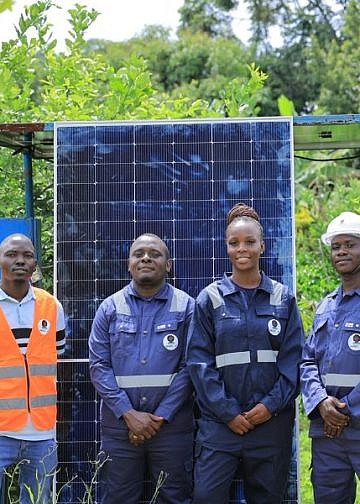
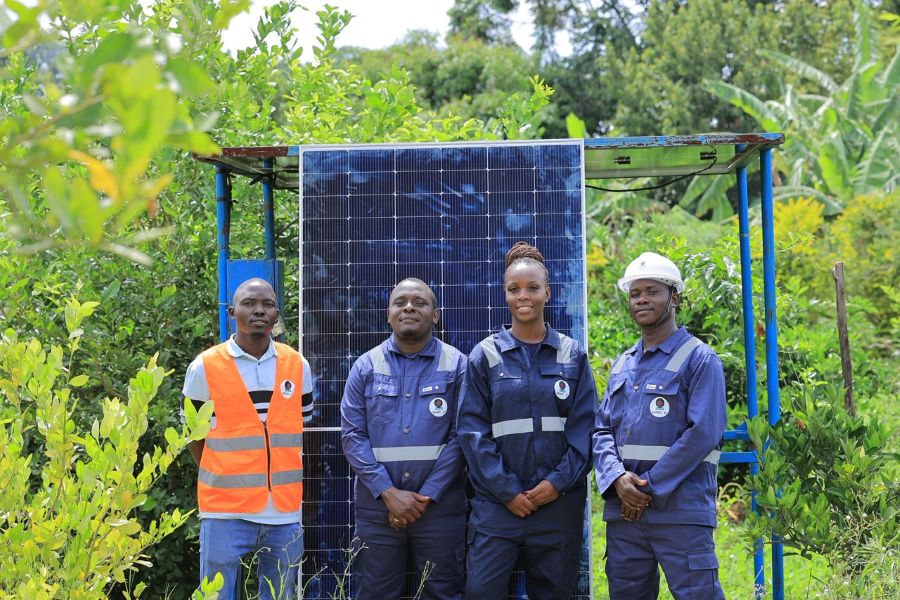
The guidance service will be offered free of charge to members of Sandi AI’s savings groups, while farmers can access the sensors through community financing arrangements. In many cases, the sensors will be bundled with Sandi-financed solar pumps and drip irrigation systems.
Beyond individual farms, savings groups will receive aggregated reports highlighting collective water-efficiency gains and return on investment, information that could strengthen their ability to secure financing from microfinance institutions.
Sandi AI says it is already exploring partnerships with satellite imagery providers to add an aerial analysis layer that would further enhance the platform’s monitoring and advisory capabilities.
The launch comes at a time when governments, development partners and agricultural innovators across Africa are increasingly promoting climate-smart farming solutions to help farmers adapt to changing weather patterns, water scarcity and rising production costs.
Led by Nabakka Sandra, Sandi AI currently operates in Uganda and Kenya and supports more than 10,000 active rotational savings groups. The company says it has enabled thousands of women-led and community groups to finance investments in clean water, solar energy, irrigation and sanitation, contributing to improved rural livelihoods and food security.