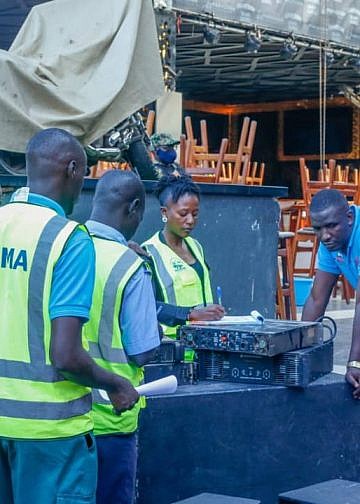


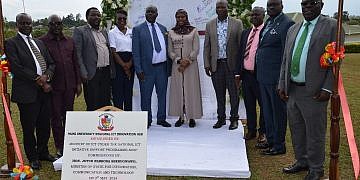
























President Museveni has officially commissioned the Kiira Vehicle Plant in Jinja, marking a major milestone for Uganda’s industrial and technological growth.
The Kiira Vehicle Plant is now the largest motor vehicle manufacturing facility in Africa, boasting a fully integrated vehicle production process.
Construction of the plant began in 2019 and was completed in 2024. Vehicle production commenced in March 2025, led by Kiira Motors Corporation, with an initial government investment of USD 120 million.
During the commissioning, Museveni highlighted the plant’s significant contribution to national economic growth, emphasizing its role in reducing Uganda’s dependency on vehicle imports. The facility currently employs hundreds of Ugandan engineers and is projected to save the country up to USD 800 million annually on car imports.
“These young people I found in the factory have jobs — where would they be working if we didn’t have Kiira?” Museveni asked.
He also outlined plans to accelerate exploration and processing of Uganda’s iron ore deposits in districts such as Kabale and Butogota.
The aim is to produce high-quality steel locally, which is vital for the plant and other industries, helping reduce the USD 900 million Uganda spends annually on steel imports.
Museveni noted that while some factories use scrap steel, it is not suitable for high-end manufacturing. He explained that new factories are being built to purify Uganda’s iron ore into high-grade steel for industrial use.
Museveni praised the Kiira Vehicle Plant as a significant step toward integrating Uganda’s transport sector, helping the country retain capital and strengthen its industrial base.
He urged Ugandan scientists and policymakers to expand local production across multiple sectors, encouraging vertical and horizontal economic integration as the key to reducing the country’s import bill and fostering long-term self-reliance.
He also cited Uganda’s scientific advancements in health, including local inventions for cancer, diabetes, and malaria treatment, urging continued innovation rooted in traditional knowledge.

Museveni warned against stagnation caused by a failure to understand and embrace the political economy and scientific evolution required for national transformation.
The Minister for Science, Technology and Innovation, Monica Musenero, expressed confidence in Uganda’s emerging knowledge economy.
She said the Kiira Vehicle Plant is part of a broader strategy to recover from missed industrial revolutions through high-impact innovations, and she affirmed the readiness of Uganda’s scientists to venture into more value chains.
Makerere University Council Chairperson, Ronah Magara, emphasized the importance of stronger collaboration between academia and policymakers.
She highlighted that the Kiira Electric Vehicles began as a research prototype at Makerere University and credited visionary leadership for its transformation into Uganda’s first local vehicle manufacturing plant. She called on the President to consider increasing university research and innovation funding to support similar projects.
National Enterprise Corporation Board Chairperson, Gen. (Rtd) Joram Mugume, commended the government for entrusting the army’s engineering department with the construction of the plant. He described it as a successful example of local content development and national capacity building.
Kiira Motors Corporation CEO, Paul Isaac Musasizi, noted that the government’s direct investment has laid the foundation for a 10-fold growth strategy in Uganda’s automobile industry.
He said Kiira Motors is focused on building a robust industrial value chain and producing vehicles that meet global standards. So far, the company has produced 37 electric vehicles and 27 diesel coaches.
It plans to produce 2,500 vehicles in the medium term, 5,000 in the long term, and 10,000 vehicles annually by 2030.