









President Museveni has ordered a review of the controversial Sovereignty Bill following widespread criticism from the public and key stakeholders.
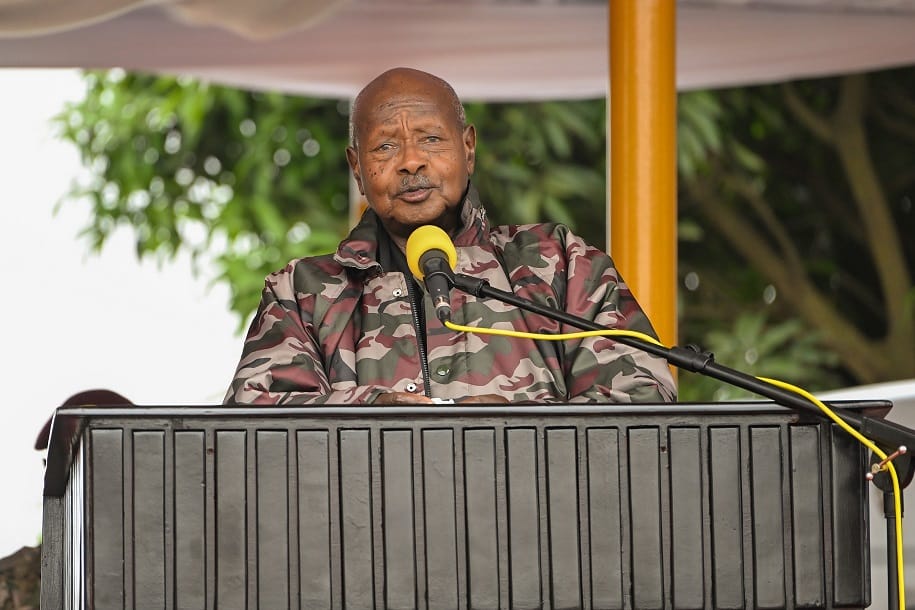
In his first public comments on the matter, the President said he had directed Government Chief Whip Hamson Obua and chairpersons of relevant parliamentary committees to refocus the bill on its original intent.
“I have talked to Hon. Hamson Obua and the Chairpersons of the relevant Parliamentary Committees to make the Bill concentrate on the Sovereignty of policy-decision-making and not to meander in the areas of the freedom of private enterprise transfers or private money transfers or church donations,” Museveni said.
The bill has drawn strong opposition from civil society organisations, NGOs, religious leaders, legal experts, traders, political parties and Ugandans in the diaspora, many of whom warned it could disrupt remittances and financial flows.
Addressing the concerns, Museveni dismissed claims that the proposed law seeks to restrict foreign direct investment or private financial transactions.
“Which Sovereignty Bill is the rwaari about? The one I initiated in the Cabinet or another one?” he asked. “The Bill will stop FDIs, support for religious bodies from abroad, remittances from Ugandans working abroad… Really!! That is not the Bill I initiated.”
The President explained that his proposal is rooted in Africa’s historical struggle for self-determination, referencing Pan-African figures such as Marcus Garvey and liberation movements like the African National Congress.
“The Bill I initiated was about what we fought for… Sovereignty in policy decision-making,” he said. “Policy decision-making on political issues, social issues, economic issues and diplomatic issues.”
Museveni emphasized that sovereignty means a country should be free to make its own decisions without external interference.
“Sovereignty means: ‘Please, muteleke (leave us alone), so that we make our own decisions.’ Do not fund groups to influence our decisions as a country,” he stated.
He added that Uganda’s Constitution already provides mechanisms for exercising sovereignty through elections and referenda.
“As our Constitution covered it, we exercise our sovereignty regularly through elections and referenda,” he noted.
At the same time, Museveni reaffirmed Uganda’s commitment to a liberal economy, distancing the bill from any suggestion of restricting financial flows.
“None of them says: do not send to Uganda or take out of Uganda money you have earned legally anywhere in the world,” he said. “We run a free economy. Forex is bought and sold in privately run Forex Bureaus.”
He stressed that the freedom of the private sector has been critical to Uganda’s economic resilience.
“This is the strength of the Ugandan economy. The freedom of the Private Sector compensates for the obstructions of the corrupt or non-patriotic public servants,” he said.
Museveni further warned against foreign interference in Uganda’s internal affairs, particularly through financial influence on policy and ideological decisions.
“To all and sundry, please do not interfere by word, action or money in that effort. Policy and ideological decisions can make or break countries,” he said.
He cited Uganda’s past challenges, attributing instability to identity-based politics.
“Uganda had become a failed state because of the politics of identity… as opposed to politics of interests,” he added.
Reiterating his position, the President said the government cannot support any measures that would undermine the free movement of capital.
“Therefore, the NRM cannot countenance the interference with the freedom of movement of capital and money into or out of Uganda,” he said. “That is our insurance against the corrupt public servants and politicians and our main instrument for growth and social-economic transformation.”
The review of the bill is expected to address public concerns while preserving its core objective of protecting Uganda’s sovereignty in policy decision-making.