










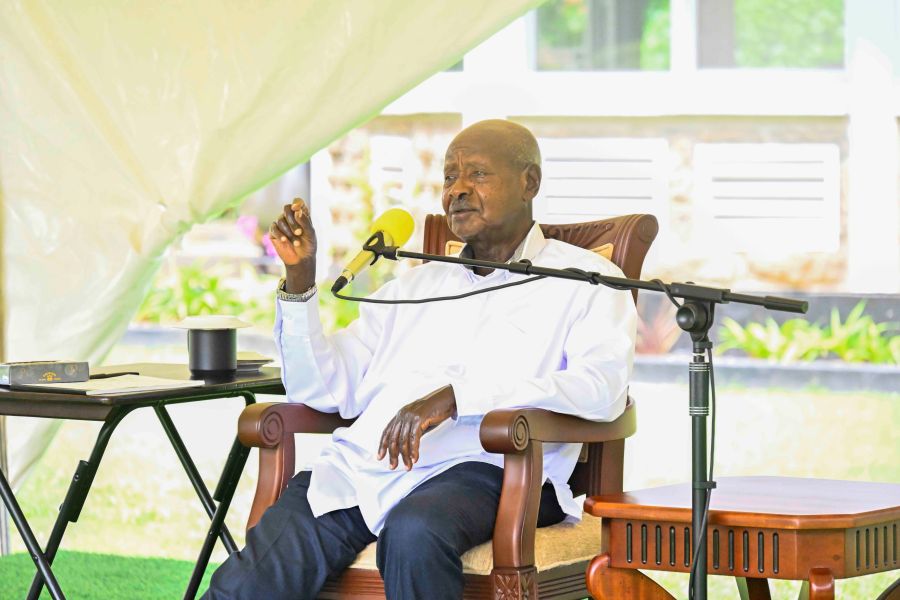
President Museveni has threatened to name and hold accountable a senior official believed to have corrupted the rollout of Uganda’s controversial Automated Express Penalty System (EPS), a program that has sparked national outcry for its abrupt enforcement and severe penalties.
Museveni acknowledged widespread public frustration, attributing the chaos surrounding the EPS to internal corruption that misled the project’s technical partners.
“There were officials linked with the criminal gangs; they are the ones that confused our Russians who were working on that project,” Museveni said, hinting at collusion between certain Ugandan officials and organized interests.
He specifically condemned the timing and severity of the express penalties, calling them excessive and poorly introduced.
“The express penalties were too high. And they introduced them at the last minute and not beforehand,” he added.
While Museveni stopped short of naming the implicated individual, he assured the public that the full truth would come out soon, signaling a forthcoming reckoning for those behind the mismanagement.
The EPS system, launched under Uganda’s Intelligent Transport Monitoring System (ITMS), was designed to modernize traffic enforcement through Automated Number Plate Recognition (ANPR) cameras.
However, instead of easing traffic woes, it unleashed a flood of complaints from motorists across the country.
Drivers reported receiving numerous penalties in a single day, many without clear justification.
Some were slapped with hefty fines within hours, while others were caught off guard by unrealistic speed limits, such as the widely criticized 30 km/h cap on urban roads and on busy thoroughfares like the Northern Bypass.
Motorists and lawmakers alike warned that such restrictions could actually endanger road safety, rather than improve it.
Amid mounting public backlash, the Ministry of Works and Transport initially suspended the Automated Express Penalty System (EPS) for one month to address widespread concerns.
The suspension was later extended, with the Ministry stating that the system remains under review as consultations with stakeholders continue.
The pause aimed to address technical flaws such as duplicate penalties, software errors, and the need for nationwide public awareness.
Adding fuel to the controversy is a damning report from Parliament’s Works and Transport Committee, which uncovered what lawmakers have called a deeply lopsided revenue-sharing arrangement between Uganda and the Russian operator of the ITMS, Joint Stock Company Global Security (GS).
According to the committee, GS is set to earn 80% of all revenue from traffic fines an estimated USD 408 million over the next decade. By comparison, the Government of Uganda would receive just 15% (USD 76 million), while the National Economic Council (NEC) is allocated a meager 5% (USD 25.5 million).
Parliamentarians condemned the agreement as “unreasonable,” saying it places the bulk of risk and public on the Ugandan government, while offering a disproportionate reward to the foreign contractor.
In light of the public backlash, Minister of Security Jim Muhwezi, whose office handled the procurement process sought to clarify his ministry’s limited role.
Muhwezi denied involvement in setting the high traffic fines, asserting that his ministry was only responsible for procurement. The decision on penalties, he said, fell squarely under the Ministry of Works and Transport.