










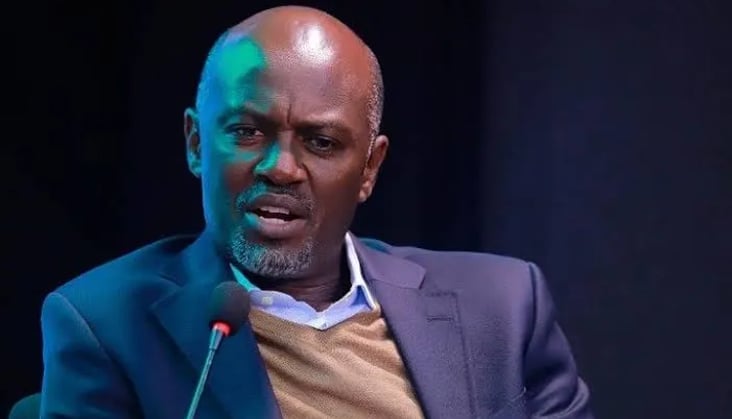
Journalist Andrew Mwenda has publicly apologised to President Museveni over his earlier claims suggesting that the president’s “advanced age” had left him “intellectually and physically exhausted,” making it easier for individuals close to power to manipulate him into funding “projects of dubious value.”
In a detailed apology, Mwenda said he regretted using age as a criticism and admitted it was “professionally and personally wrong” to frame his argument that way.
“I should have focused on the merits and demerits of his decisions, not the age at which he made them,” Mwenda said.
Mwenda added that while he had disagreed with some of Museveni’s choice of private business partners in government-backed projects, he had always supported the principle of state support for infant industries.
He explained that his criticism had been aimed at selected business partners rather than the policy itself.
The journalist also apologised to entrepreneurs Magoola of Dei-Biopharma and Senfuka, whom he had previously labelled “conmen” and “witch doctors,” acknowledging he had not spoken to them or visited their factories. Mwenda promised to meet them and review their projects firsthand.
Mwenda’s apology follows Museveni’s strong response to his earlier article, in which the president described him as a “do-nothinger,” “traitor,” and agent of neo-colonial interests.
Museveni defended government-backed initiatives Mwenda had questioned, including herbal medicine ventures, agro-industrial projects, and the state-backed Kiira Motors initiative.
In his statement, Mwenda also reflected on conversations with international figures such as Bill Gates and Silicon Valley investors, who argued that in Africa, where private risk capital is scarce, state support is necessary despite a low success rate.
He said these discussions changed his perspective and reinforced the legitimacy of government intervention in supporting private industry.
Mwenda noted that that government support for private businesses should be guided by clear sector priorities, transparent allocation criteria, and measurable performance targets, lessons he said Uganda can learn from successful countries such as South Korea, Taiwan, and China.