







President Yoweri Museveni has said the ruling National Resistance Movement (NRM) is not merely making promises ahead of the 2026 general elections but presenting a record of tangible achievements from the past four decades that it intends to build on in the next term.
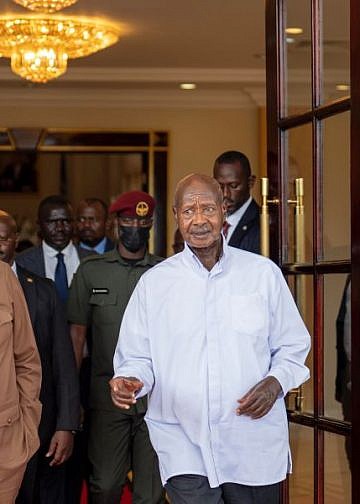
Speaking to thousands of supporters at Saaza Grounds in Budaka District, Museveni, the NRM presidential flag bearer, said the party’s record of peace, development, and wealth creation stands as proof of its effective leadership.
“The NRM is not just promising, but presenting what has already been done,” Museveni said. “In the last 40 years, we brought peace first, and then development came — both in infrastructure and social services.”
Museveni outlined the NRM’s achievements in building Uganda’s economic and social infrastructure, noting that peace has been the foundation for all progress.
He highlighted completed and ongoing road projects in Budaka and the surrounding Bukedi sub-region, including the Iganga–Mbale, Tirinyi–Pallisa–Kumi, and Pallisa–Kamonkoli–Mbale roads, as well as plans for the Nabumali–Butaleja–Namutumba road.
“Electricity has reached many areas, and now everyone has a telephone in their pocket,” he said.
On water coverage, the President reported that Budaka District has achieved 93% access to safe water, with 299 of 323 rural villages connected to clean water sources.
The Budaka Town Council and Kamonkoli Piped Water Systems are operational, serving over 35,000 people. Ongoing projects include new boreholes, spring protection works, and piped water systems for Naboa, Iki-Iki, and Kachomo.
Museveni reported steady progress in education, with 59 government and 94 private primary schools, and 10 government and 23 private secondary schools across Budaka. He said plans are underway to ensure every parish has a primary school and each sub-county a secondary school.
However, he criticized local authorities for continuing to charge school fees in public schools, saying it undermines the government’s free education policy.
“I introduced free education 30 years ago, but some people have not implemented it. As a result, children drop out,” he said.
To address the issue of school dropouts, Museveni cited the establishment of Presidential Industrial Skilling Hubs, including the Bukedi Zonal Hub in Tirinyi, Kibuku District, which trains youth aged 18–35 in vocational trades.
He interacted with graduates such as Michael Onganga, a welder who now employs two people, and Jane Lagose, a tailor who started her own business after training.
“These children had lost hope because of school fees, but after six months of training, they are producing items that used to be imported,” Museveni said. “In the next term, we shall ensure no child is deprived of free education.”
Museveni also outlined ongoing improvements in the health sector. Budaka District currently has one Health Centre IV and 14 Health Centre IIIs, with plans to upgrade Butove Health Centre II and build new facilities in Kakoli, Kamonkoli, Iki-Iki, Kachomo, and Kabuna sub-counties.
“When these are complete, all the 20 sub-counties will have Health Centre IIIs, and one will be upgraded to a district hospital,” he said.
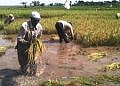
Reaffirming his long-standing message of household wealth creation, Museveni urged families to adopt the 4-acre model, dedicating land to coffee, food crops, fruits, and pasture, supplemented by livestock and fish farming.
“Development is ours, but wealth and poverty are yours,” he said. “What you have in your home depends on how you use your land.”
He cited successful farmers such as Joseph Ijala of Serere District, who earns Shs6.8 million daily from eggs and milk, and Florence Nabutono of Budaka, who has improved her piggery enterprise under the Parish Development Model (PDM).
Museveni also referenced his Baralegi farm in Lira District, where he practices the 4-acre model and earns Shs100 million annually from fish farming.
Job creation and industrial growth
Museveni described job creation as the NRM’s fourth pillar after peace, development, and wealth creation. He emphasized that most new jobs now come from private enterprises rather than government employment.
He showcased examples like Fred Byamukama of Kagadi, whose 4-acre farm employs 26 workers and generates Shs700 million in annual profits.
“Factories are another source of jobs,” he said. “The Sino-Mbale Industrial Park employs 12,000 people, and across Uganda, factories now employ 1.3 million people compared to 480,000 in government service.”
NRM Second vice chairman( female), Anita Among, thanked the President for restoring peace in Bukedi.
“Before you came, we used to run away because of the Karimojong rustlers and Lakwena rebels. Now, our youth sleep in peace,” she said.
Barbara Nekesa Oundo, the NRM National Treasurer, presented the “Bukedi Service Delivery Handbook”, documenting the party’s achievements and remaining priorities.
“Our campaign theme is ‘Protecting the Gains.’ This handbook highlights what NRM has accomplished in Bukedi and what remains to be done,” she said.
Budaka District NRM Chairperson, Kyebene Musa, raised local concerns including the need to extend electricity to Katira, Mogiti, and Nasa sub-counties and called for compensation for residents affected by cattle rustling.
He also requested the establishment of an industrial park in Katira to create jobs for local youth.