












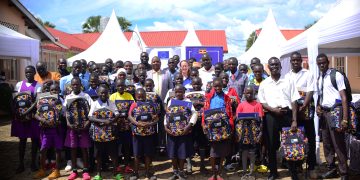





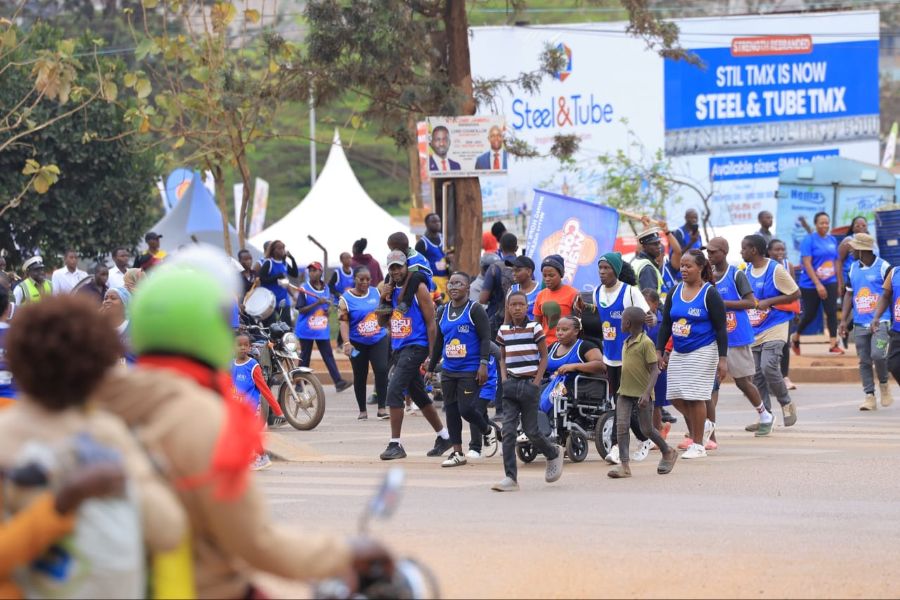
More than 2,000 participants gathered on Sunday morning at Makerere University Business School (MUBS) for the Annual CoRSU Walk 2025, held under the theme “Bring Hope to Children with Disabilities.”
The charity walk, organized by CoRSU Rehabilitation Hospital, aims to raise public awareness on disability issues and generate funds to support treatment and purchase essential hospital equipment for children with disabilities.
According to Robert Ochai, CEO of CoRSU, this year’s walk was not only well-attended but also impactful in furthering the hospital’s mission.
“It’s a very important activity that we conduct every year to raise awareness, especially about children living with disabilities,” said Ochai after the walk.

He emphasized the walk’s core message of inclusion, urging communities to offer support, rather than neglect, to children with disabilities.
“Don’t keep the children with disabilities in the background—bring them care. Every child deserves an opportunity to achieve their full potential in life through treatment and care,” he added.
CoRSU’s fundraising goal for 2025 is shs400 million, which will go towards acquiring new medical equipment and supporting the hospital’s child-focused services.
“We hope to raise shs400 million to help us with the many needs we have, including treatment and replacing essential equipment,” Ochai revealed.
He expressed gratitude to all stakeholders and noted that nearly all 2,000 walk kits had been sold—a sign of strong public support.
“We want to thank everyone who supported us financially, morally, and in kind. We’ve sold all the kits, and that shows the commitment people have for this cause,” he said.
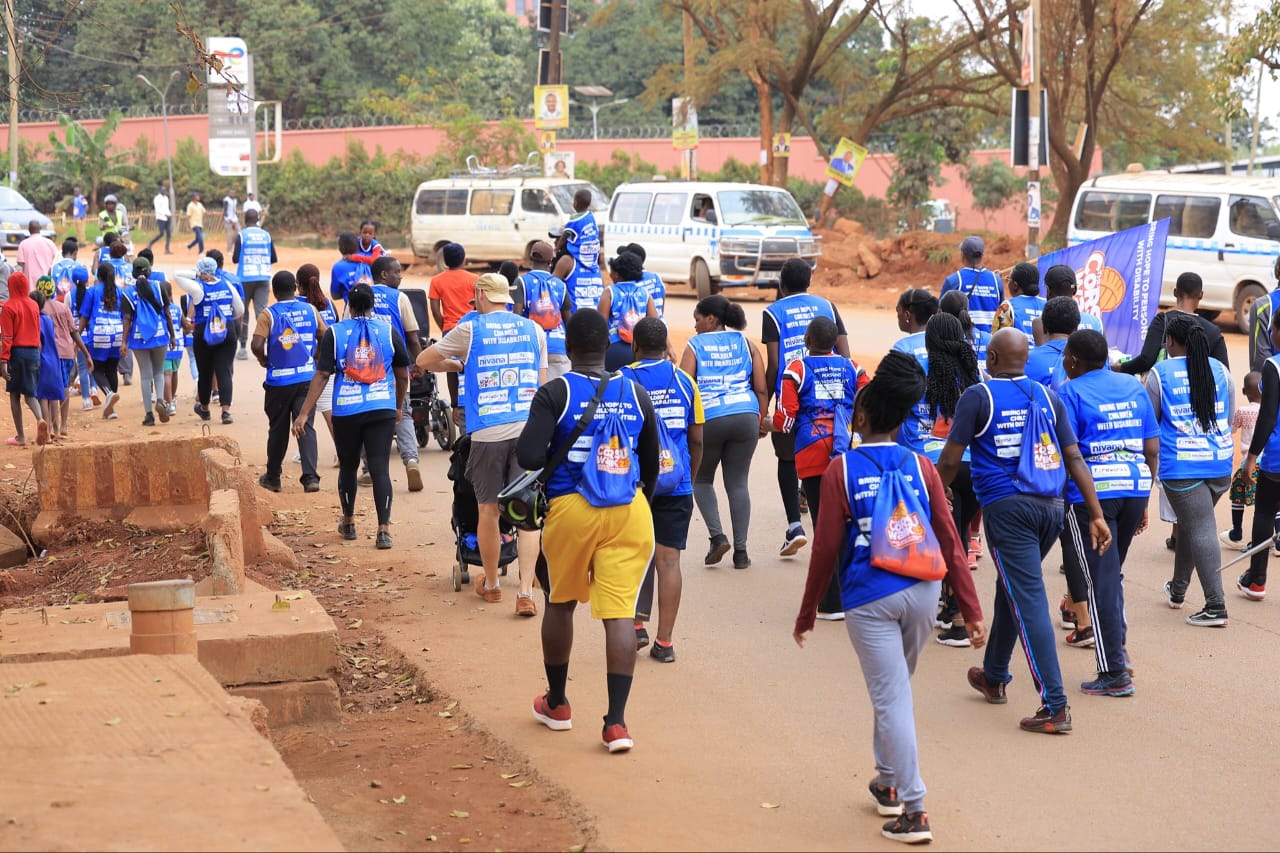
The event attracted prominent figures including Noah Kiyimba, Buganda Kingdom’s Minister for Cabinet, Lukiiko, and Special Duties, who called for greater inclusion of persons with disabilities in national planning.
“In Uganda, not much attention is paid to children with disabilities, yet this is a special group that really needs our focus,” Kiyimba said.
He criticized the lack of disability-friendly infrastructure in public spaces and urged government institutions to take action.
“Many public places don’t even have toilets or ramps for people with disabilities. We must plan for these people in everything we do,” he stressed.
Kiyimba also proposed a 100% tax waiver on assistive devices such as wheelchairs and walking gadgets to improve accessibility for families in need.
“The walking gadgets and medical equipment are very expensive. If government can waive taxes on these items, it would make a big difference for many families,” he said.
He commended CoRSU’s policy of offering free treatment for children under five and subsidized care for those up to 18 years, encouraging parents to seek help for their children.
“Please, whoever knows children who need assistance, bring them to CoRSU. They will be helped,” he urged.
Also in attendance was Ambrose Tashobya, Chairperson of the National Council of Sports, who praised CoRSU for its support to athletes recovering from injuries.
“It was a pleasure to be part of this CoRSU Walk. CoRSU is a partner with the National Council of Sports in helping athletes who sustain injuries,” Tashobya noted.
He applauded the hospital’s commitment to community care and affordability.
“They do very good work for our communities and offer care at highly subsidized rates. I’ve seen their impact, especially on children with disabilities,” he said.
Tashobya called on both individuals and organizations to offer more support to CoRSU.
“I call upon everyone in this country to give some level of support to CoRSU so they can amplify the great work they do,” he said.
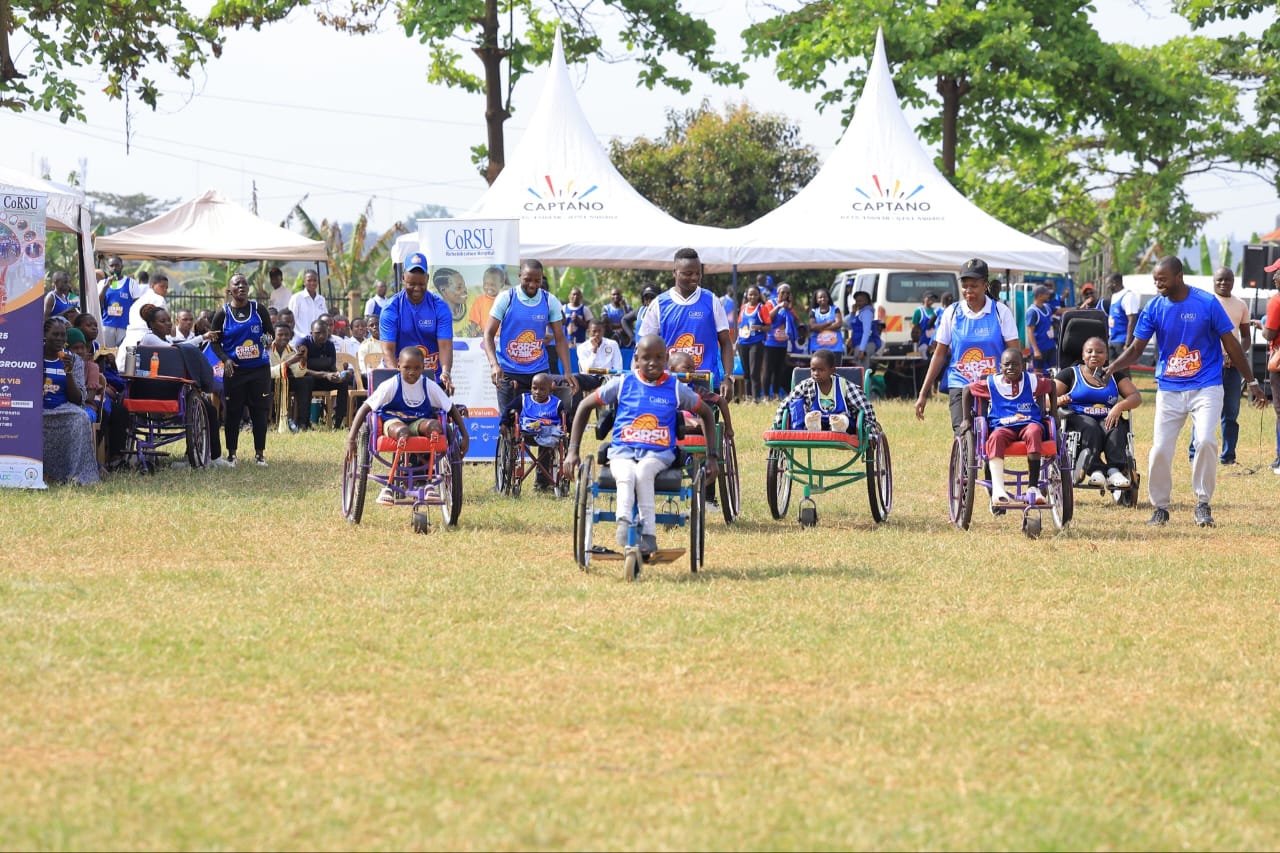
A highlight of the day was a spirited wheelchair race, which brought both joy and powerful advocacy messages. One of the racers, Mirabo Asiimwe, used the platform to speak out on inclusion and education.
“They should give us a chance to show that we are able. We are educated, empowered, and can advocate for ourselves,” she said.
She criticized schools that turn away children with disabilities and called for better sensitization.
“Whenever persons with disabilities go to schools, they are chased away because they’re seen as a burden. Schools should be sensitized to enroll and support them,” Asiimwe urged.
She further appealed to government to ensure equal access to education.
“The government should ensure that persons with disabilities access public schools and study like other children. We can also be productive if given the opportunity,” she added.