

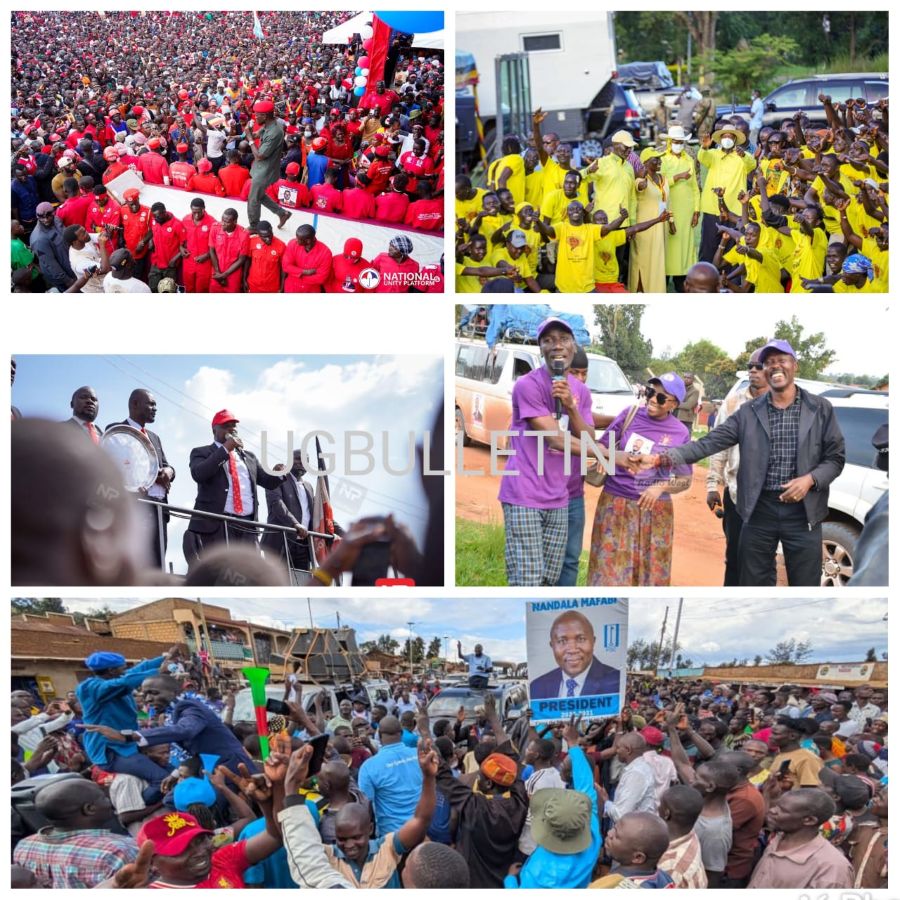
As the presidential campaigns enter the fourth week, many Ugandans are expressing surprise and appreciation at the calm and largely peaceful atmosphere across the country.
Unlike previous election seasons often marked by running battles between security forces and opposition supporters, tear gas, live bullets, and arrests, this year’s campaigns have so far seen candidates move more freely, meet their supporters, and address rallies with minimal interruption from security agencies.
In past elections, opposition figures routinely complained of harassment, campaign blockades, and violent disruptions.
This time, however, there is a visible shift in approach, with most candidates, including those from the opposition, being granted access to venues and allowed to proceed with their campaign schedules.
Although a few incidents were reported such as changes in planned routes and brief disruptions to the campaigns of NUP’s Robert Kyagulanyi, CCP’s Mubarak Munyagwa, and FDC’s Nandala Mafabi, no major violent confrontations have occurred so far, raising public hope for a new chapter in Uganda’s electoral politics.
Political commentators say the current calm aligns with earlier remarks made by Democratic Party President Norbert Mao, whose party chose not to field a presidential candidate and instead backed incumbent President Yoweri Museveni. Mao had predicted a peaceful season.
“This is going to be the quietest election. Those opposition candidates who have always been eating from sympathy—no one is going to teargas them this time. Let them talk about real issues to Ugandans, not just survive on sympathy.”
While isolated arrests were noted during the second week of Kyagulanyi’s campaign and some restrictions were enforced when candidates attempted to pass through certain towns, the situation remains significantly more peaceful compared to previous electoral cycles.
Collins Mwanje, 43, a supporter of the National Unity Platform (NUP), said that for the first time in his life, he is experiencing a campaign season without tension or fear.
“I’m 43 years old, but this is the first time Uganda has an election coming up in just two months and you can’t feel any panic or heavy atmosphere. It’s as if we don’t even have an election in January,” he said, urging authorities to maintain an equal and peaceful playing field for all candidates.
Ugandans are now calling for this spirit of equal treatment and non-violence to continue throughout the campaign period and on election day itself, saying a fair and peaceful process is key to restoring public trust in the country’s democratic institutions.