











The Deputy Managing Director of the East African Crude Oil Pipeline (EACOP), John Habumugisha, has called on Ugandan youth to strategically prepare for the rapidly expanding opportunities within the oil and gas sector as the country moves closer to producing its first barrel of oil in 2026.
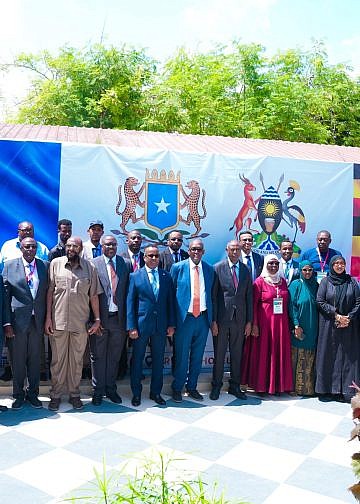
Habumugisha made the remarks during the 6th Annual National Content Conference held at Mestil Hotel, Nsambya, where government officials, private sector players, and industry stakeholders met to review progress and discuss how to strengthen national participation in Uganda’s emerging oil economy.
He noted that Uganda’s petroleum journey is transitioning from the construction stage to the operational phase—an important shift that will require a new set of skills and technical competencies.
“Opportunities are coming for those who are prepared. We are shifting from construction to commissioning and operations. Recruitments will continue, and we need commissioning and operational experts. These opportunities are available and accessible; take them and reap the benefits the oil and gas sector presents,” he said.
Habumugisha outlined key achievements of the EACOP project to date, including 74% completion of construction, employment of 2,900 Ugandans, training of 141 selected students in fields such as panel operation, field operations, and mechanical technology, as well as the provision of 111 internship opportunities. He said these milestones reflect the country’s increasing readiness for oil production.
State Minister for Energy Okaasai Opolot reiterated the call for Ugandans to prepare for the next phase of the project, revealing that 5,000 Ugandan enterprises have already benefited from supplier development programmes, capacity-building efforts, and business linkages.
He noted that the petroleum project is expected to run for more than 25 years, with an estimated annual operational expenditure of over US$8 billion, creating long-term prospects for local content participation.
Okaasai also encouraged training institutions to modernize their curricula to meet industry demands.
“Uganda will need internationally certified technicians, instrumentation specialists, control room operators, pipeline inspectors, digital engineers, geoscience experts, and environmental scientists. Our training institutions must evolve; our skills ecosystem must become more agile, industry-driven, and technology-focused,” he said.
Uganda is expected to produce its first oil in 2026, which will be transported through the EACOP pipeline from Kabaale in Hoima District to the Chongolean Peninsula near Tanga Port in Tanzania, with a planned capacity of approximately 246,000 barrels per day.