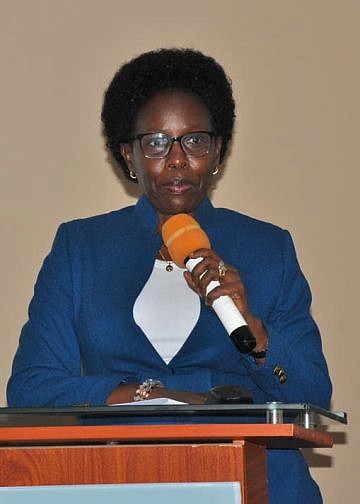










The State Minister for Gender and Culture, Peace Mutuuzo, has praised the Power to You(th) programme for its role in empowering young people and tackling harmful practices such as child marriage, female genital mutilation (FGM), and gender-based violence.
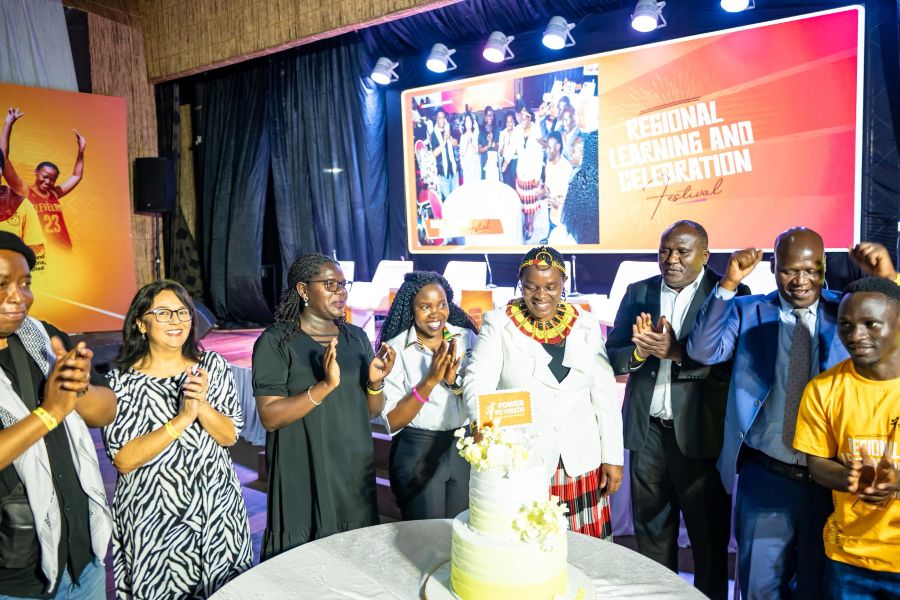
She made the remarks on Thursday at the Power to You(th) Regional Learning and Celebration Festival held at Ndere Cultural Centre.
The two-day festival has brought together youth leaders, researchers, government officials, civil society organisations, and development partners to reflect on the programme’s achievements.
“It is a moment of reflection, a platform of knowledge, and a celebration of a journey that has transformed lives, communities, and policies,” Minister Mutuuzo said.
She said the programme had shown the power of collaboration between young people, government, and civil society.
“The Power to Youth programme has demonstrated what is possible when young people, the government, and civil society work hand in hand,” she said.
Mutuuzo applauded the leadership of Reproductive Health Uganda (RHU), the Uganda Youth and Adolescents Health Forum (UYAHF), and the Eastern African Sub-Regional Support Initiative for the Advancement of Women (EASSI).
Supported by the Netherlands Ministry of Foreign Affairs through Sonke Gender Justice, the initiative has helped communities confront social norms fuelling violence and discrimination against women and girls.
Minister Mutuuzo further said the programme aligns with Uganda’s efforts to create a safe and inclusive society.
She cited laws such as the Anti-FGM Act (2010), the Domestic Violence Act (2010), and recent amendments to the Employment and Succession Acts, as well as new measures under the Computer Misuse Act to tackle online gender-based violence.
However, she emphasised that laws alone were not enough.
“Implementation requires strong partnerships between government and civil society, working at the community level where change is felt most deeply.”
Mutuuzo highlighted the unique approach of Power to Youth which placed young people at the centre through research, human-centred design, and gender transformative approaches.
While celebrating these gains, she issued a call to action: “Government alone cannot end harmful practices, but together, through shared responsibility, we can sustain impact and scale change.”
The minister pledged government’s commitment to strengthening youth–adult partnerships, scaling up research and innovations, and deepening collaboration with civil society.
In his speech, Jackson Chekweko, Executive Director of RHU, said the programme had reshaped youth empowerment since its launch in 2021.
“Five years ago, when the Power to You(th) journey began, we dared to imagine a future where young people were not passive beneficiaries but active architects of change. And today, as we gather here, I am proud to say that this dream has become a reality,” he said.
“We have also walked this journey with the Government of Uganda, through the Ministry of Health and the Ministry of Gender, Labour and Social Development, whose support and collaboration have been crucial in expanding access to services and creating an enabling environment for young people to thrive. And of course, none of this would have been possible without the generosity of our donors.” Chekweko added.
Dr Irene Mwenyango, Acting Commissioner for Adolescent Health at the Ministry of Health, noted that Uganda’s youthful population faced persistent challenges, including teenage pregnancies at 24% and early marriages.
“We extend our heartfelt appreciation to Power to You(th) for amplifying our reach to young people in border districts, islands, and other marginalised communities,” she said.
Moving forward, she urged greater emphasis on the power of evidence, knowledge-sharing, and accountability to ensure that no young person is left behind.
Bafana Khumalo, Co-Executive Director of Sonke Gender Justice, called for bold, inclusive, and feminist-driven programmes.
“The future is not waiting for us. We are shaping it right here and right now… No moral force can stop determined youth with a vision, passion, and commitment,” he said.
Day one of the festival also featured panel discussions reflecting on the programme’s impact across implementing districts.
The sessions highlighted how Power to Youth had amplified young voices, advanced sexual and reproductive health and rights (SRHR), promoted gender equality, and strengthened youth leadership.
The Power to Youth programme in Uganda is implemented in specific districts, including Kampala, Kalangala, Isingiro, Busia, Mbale, and Bukwo.
The program focuses on empowering young people to advocate for their rights and address harmful social norms through partnerships with the organizations mentioned above.