

As the 2026 general elections approach, a growing crisis is unfolding within Uganda’s political landscape, one that threatens the integrity of affirmative action policies designed to uplift marginalized communities.
The National Union of Disabled Persons of Uganda (NUDIPU) is sounding the alarm over an increasing number of individuals fraudulently claiming to have disabilities in order to vie for positions specifically reserved for Persons with Disabilities (PWDs).
This disturbing trend is taking root in several districts, including Luwero, Kibale, Hoima, and Kayunga.
Following the release of the electoral roadmap by the Electoral Commission, political parties have begun nominating candidates at various levels.
But in what appears to be a deliberate abuse of the system, able-bodied individuals are now targeting PWD electoral slots for personal political gain.
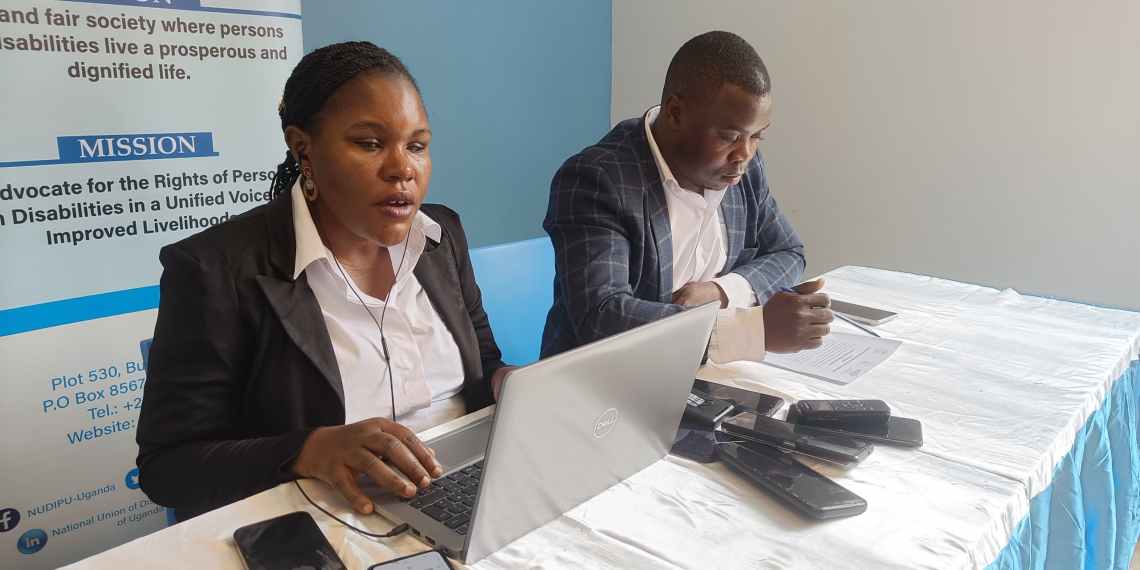
“There are people who are physically strong, they can walk and run, yet they claim to be disabled. Unfortunately, returning officers are ignoring complaints from genuine PWDs, questioning their authority to determine another person’s disability,” said Esther Kyozira, Chief Executive Officer of NUDIPU, during a media briefing on Wednesday.
With local disability leaders increasingly sidelined in the vetting process, genuine representatives have turned to NUDIPU for help, citing an erosion of trust in the structures meant to protect their political rights.
Kyozira is urging the Electoral Commission to take a more active role in verifying the legitimacy of disability claims among aspiring candidates. “We are seeing people pretending to have various disabilities just to benefit politically. This undermines the purpose of PWD representation,” she stressed.
Uganda’s Persons with Disabilities Act outlines clear categories of disability including physical impairments like cerebral palsy and paralysis, as well as visual, hearing, and mental impairments. Yet, despite this legal framework, enforcement remains lax.
According to the 2024 national census, persons with disabilities make up 13.2% of Uganda’s population a substantial demographic that affirmative action policies aim to empower.
However, the infiltration of impostors threatens to silence the voices of those the system is meant to support.
Kyozira highlighted the worrying trend not only within national election structures but also within internal party processes like the National Resistance Movement (NRM) primaries.
“Our appeal to the Electoral Commission and political parties is simple: screen all candidates claiming disability before confirming them as nominees or delegates. This is not currently happening,” she said.
NUDIPU has proposed a partnership with the Electoral Commission to ensure thorough verification of disability claims, warning that failure to act risks further marginalizing already disadvantaged citizens.
“If non-disabled individuals continue to occupy spaces meant for us, then we are not empowering persons with disabilities to speak for their own issues. That’s why we have come out strongly today,” Kyozira concluded.
As the election season intensifies, the battle to protect the integrity of PWD representation is becoming just as critical as the fight for votes.