











Ntare Guma Mbaho Mwine, an American–Ugandan actor and filmmaker, has brought to the big screen the remarkable life of a rural Ugandan “camera man” whose work quietly documented generations of community life.
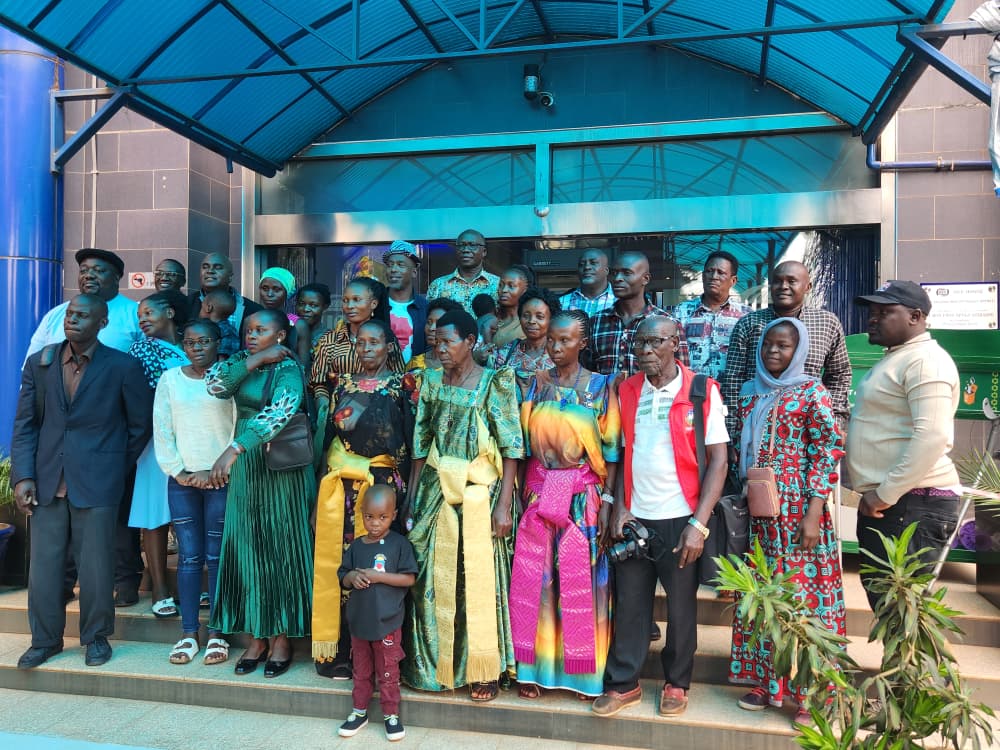
Hosted by the Uganda Communications Commission (UCC) on Friday, Mwine unveiled his new documentary Memories of Love Returned, a film inspired by the life and work of village cameraman Aloysius Ssalongo Kibaate.
The documentary tells the story of Kibaate, whose camera captured everyday moments of rural life in Lwengo District for more than 50 years, unknowingly creating a powerful visual archive of community history.
Mwine recalled that while traveling through the area, his vehicle developed a flat tyre, leaving him stranded by the roadside. As he waited, a man riding a bicycle with a camera strapped to his chest approached him and asked what had happened.
The man introduced himself as Kibaate.
Curious about the camera, Mwine asked what he used it for. Kibaate explained that photography was his livelihood — he travelled through villages taking pictures for people and preserving memories for families.
That unexpected encounter marked the beginning of a friendship that would later inspire the documentary.
Over time, Kibaate opened up to Mwine, sharing intimate details about his life, his work and personal secrets that few people knew about.
During their conversations, Mwine asked Kibaate whether he had ever considered documenting his life story. Kibaate said he had never thought about it.
Recognizing the uniqueness of his life and work, Mwine encouraged him to share his story so it could be preserved and shared with the world.
In 2002, Mwine recorded Kibaate narrating his life story. What amazed him most was the vast archive the photographer had built over the years — more than 50,000 photographic negatives stored in his home.
Through these images, Kibaate had unknowingly created one of the most intimate visual archives of rural Ugandan life, capturing weddings, family portraits, community events and everyday village moments across generations.
Unfortunately, Kibaate died in 2006 before the documentary could be completed.
However, Mwine remained in contact with the photographer’s family, including his three known wives, who helped him gather more information while compiling the story.
The process also revealed surprising details about Kibaate’s personal life that even some of his relatives had not known.
According to Mwine, the documentary reveals that Kibaate had more than 12 wives and fathered 47 children, far more than the 28 children the family had previously believed he had.
When the film was first screened in Mbirizi village, emotions ran high as the documentary revealed previously unknown family connections, including children Kibaate had with women in the community whose relationships had never been publicly known.
Speaking at the event, Fred Otunnu, Acting Executive Director of the Uganda Communications Commission, praised Mwine for supporting the growth of Uganda’s film industry.
He noted that despite his international success, Mwine continues to invest his time and talent in telling Ugandan stories.
Otunnu emphasized that the creative industry plays a role beyond entertainment, contributing to cultural identity, economic growth, employment opportunities and youth empowerment.
He highlighted several initiatives implemented by UCC to strengthen the country’s film and content creation ecosystem, including the Content Development Support Programme, which provides financial and technical support to filmmakers, musicians and other content creators.
Otunnu also called on Ugandans to support and consume local content and commended Kibaate’s family for working closely with Mwine to ensure the documentary was completed.
“Memories of Love Returned” is scheduled to premiere this weekend from Saturday to Sunday.